
.svg)

.svg)
.svg)
Achilles Tendon Pain: When to Rest and When to See a Podiatrist in Walnut Creek or San Ramon



Experiencing Achilles tendon pain? Learn when to rest and when to see a podiatrist in Walnut Creek or San Ramon. Diablo Foot & Ankle offers expert diagnosis and treatment for Achilles injuries. Call (925) 464-1982 to schedule an appointment.
The Achilles tendon is the largest and strongest tendon in the human body. It connects your calf muscles to your heel bone and is essential for walking, running, and jumping. Because it bears the brunt of your body weight and the force of your movements, it is also highly susceptible to injury. For active residents of Walnut Creek, San Ramon, and Antioch, Achilles tendon pain is a common complaint, especially during the spring when outdoor activities increase.
At Diablo Foot & Ankle, we frequently see patients who have tried to push through Achilles pain, only to make the injury worse. Knowing when to rest and when to seek professional medical attention is crucial for a full and speedy recovery.
Understanding Achilles Tendon Injuries
Achilles tendon injuries typically fall into two main categories:
1. Achilles Tendinitis
Achilles tendinitis is an overuse injury characterized by inflammation of the tendon. It is most common among runners who suddenly increase the intensity or duration of their runs, or middle-aged adults who play sports like tennis or basketball only on the weekends (often referred to as "weekend warriors").
Symptoms of Achilles tendinitis include:
- A mild ache in the back of the leg or above the heel after running or other sports activity.
- More severe pain that occurs after prolonged running, stair climbing, or sprinting.
- Tenderness or stiffness, especially in the morning, which usually improves with mild activity.
2. Achilles Tendon Rupture
A more severe injury is an Achilles tendon rupture, which is a partial or complete tear of the tendon. This often happens during sports that involve sudden stops, starts, or pivots.
Symptoms of an Achilles tendon rupture include:
- A sudden, sharp pain in the back of the ankle or calf, often described as feeling like you were kicked or shot in the back of the leg.
- A popping or snapping sound at the time of injury.
- Swelling near the heel.
- An inability to bend your foot downward or push off the injured leg when walking.
- An inability to stand on your toes on the injured leg.
When to Rest and Try Home Care
If you are experiencing mild, aching pain in your Achilles tendon after an activity, and the pain does not interfere with your ability to walk normally, it is usually safe to start with conservative home care. The most effective approach is the RICE method:
- Rest: Stop the activity that caused the pain. Switch to low-impact exercises like swimming or cycling until the pain subsides.
- Ice: Apply ice packs to the affected area for 15 to 20 minutes, several times a day, to reduce inflammation.
- Compression: Wrap the ankle with an elastic bandage to help reduce swelling and support the tendon.
- Elevation: Elevate your foot above the level of your heart whenever possible to minimize swelling.
Over-the-counter anti-inflammatory medications, such as ibuprofen or naproxen, can also help manage pain and swelling.
When to See a Podiatrist
While mild tendinitis often responds well to rest, ignoring persistent or severe pain can lead to chronic issues or a complete rupture. You should schedule an appointment with a podiatrist in Walnut Creek or San Ramon if you experience any of the following:
- Severe Pain: Pain that is sharp, sudden, or debilitating.
- Inability to Bear Weight: You cannot walk comfortably or stand on your toes.
- Visible Deformity: You notice a gap or indentation in the tendon above your heel.
- Persistent Symptoms: The pain does not improve after a few days of rest and home care, or it continues to worsen.
- A "Pop" or "Snap": You heard or felt a popping sensation at the time of the injury.
Expert Diagnosis and Treatment at Diablo Foot & Ankle
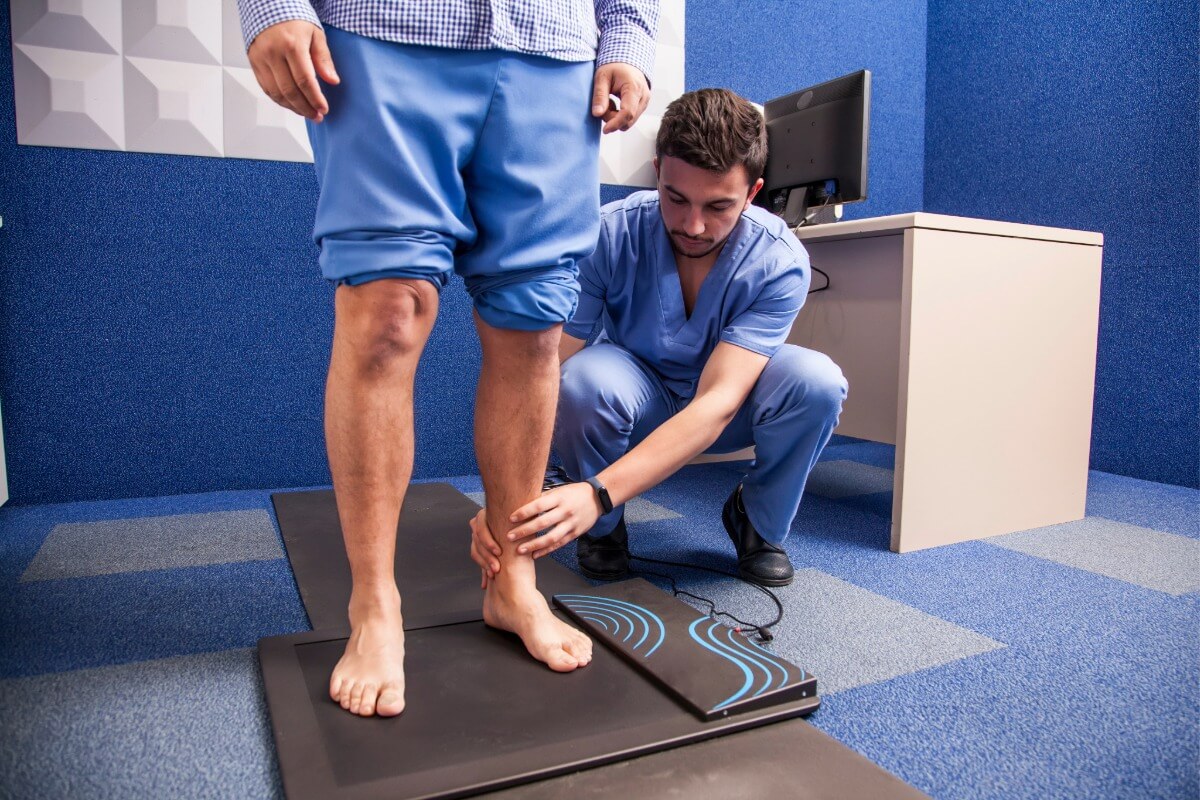
If you suspect an Achilles tendon injury, the podiatrists at Diablo Foot & Ankle will perform a thorough examination, which may include imaging tests like X-rays or an MRI, to determine the extent of the damage.
Depending on the diagnosis, your treatment plan may include:
- Physical Therapy: Specific exercises to strengthen the calf muscles and improve flexibility.
- Custom Orthotics: Shoe inserts to correct biomechanical imbalances and reduce stress on the tendon.
- Immobilization: Wearing a walking boot or cast to allow the tendon to heal.
- Advanced Therapies: Treatments like Shockwave Therapy or PRP (Platelet-Rich Plasma) injections to stimulate healing in chronic cases.
- Surgery: In cases of a complete rupture or chronic tendinitis that does not respond to conservative care, surgery may be necessary to repair the tendon.
Don't Let Achilles Pain Keep You Down
Your Achilles tendon is vital to your mobility. Do not let pain keep you from enjoying your favorite activities in the East Bay. The team at Diablo Foot & Ankle is here to provide expert care for all your foot and ankle needs.
We proudly serve patients at our three convenient locations:
- Walnut Creek
- San Ramon
- Antioch
If you are experiencing Achilles tendon pain, contact Diablo Foot & Ankle today at (925) 464-1982 to schedule a consultation. Let us help you get back on your feet safely and effectively.
Disclaimer: The information provided in this article is for educational purposes only and does not constitute medical advice. It is not intended to be a substitute for professional medical advice, diagnosis, or treatment. Always seek the advice of your physician or other qualified health provider with any questions you may have regarding a medical condition. Never disregard professional medical advice or delay in seeking it because of something you have read in this article.
Related articles


Request your podiatry consultation now
Fill out our contact form for a prompt call back. Diablo Foot & Ankle: Premier podiatry group in Walnut Creek & Antioch
