
.svg)

.svg)
.svg)
Ingrown Toenail Treatment in San Ramon: When to See a Podiatrist


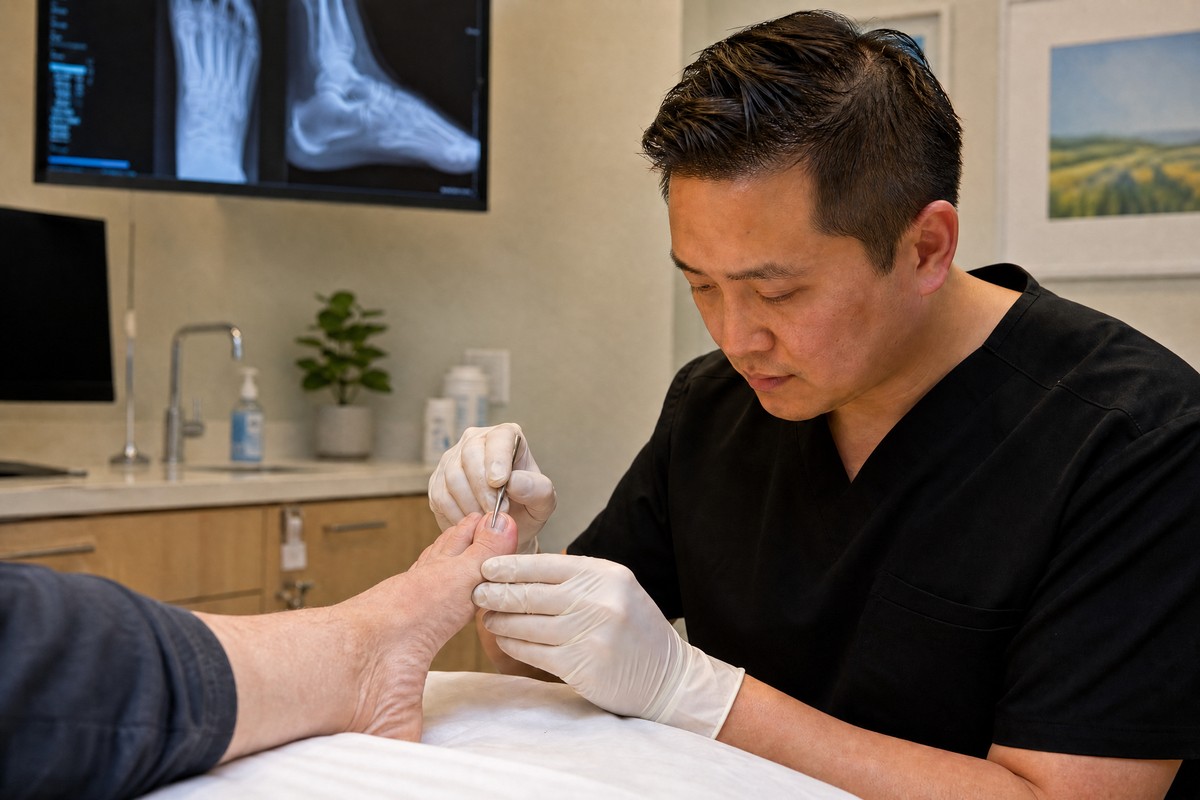
An ingrown toenail might seem like a minor annoyance at first, but anyone who has experienced a severe case knows how quickly it can escalate into a debilitating problem. The sharp, throbbing pain can make wearing shoes unbearable and turn a simple walk into an agonizing task.
At Diablo Foot & Ankle, our podiatrists in San Ramon, Walnut Creek, and Antioch treat ingrown toenails every day. It is one of the most common conditions we see, and unfortunately, it is also one of the most frequently mishandled by patients trying to treat it at home. If you are dealing with an ingrown toenail in San Ramon, this guide will explain why it happens, what you should avoid doing, and how professional treatment can provide permanent relief.
What Causes an Ingrown Toenail?
An ingrown toenail, or onychocryptosis, occurs when the edge or corner of the nail grows down and cuts into the adjacent skin of the toe. This breaks the skin barrier, causing inflammation, pain, and creating an entry point for bacteria. While it most commonly affects the big toe, it can happen to any toe.
Several factors contribute to the development of an ingrown toenail:
Improper Nail Trimming: This is the leading cause. Cutting your toenails too short or rounding the edges encourages the nail to grow into the skin as it lengthens. Toenails should always be trimmed straight across.
Ill-Fitting Footwear: Shoes that are too tight, too narrow in the toe box, or too short place excessive pressure on the toes. This constant pressure forces the nail edge into the surrounding tissue. High heels and tight athletic shoes (like soccer cleats or ballet shoes) are common culprits.
Trauma to the Toe: Stubbing your toe, dropping a heavy object on it, or participating in activities that involve repeated pressure on the toes (like running or kicking) can alter the growth pattern of the nail and cause it to become ingrown.
Genetics and Nail Anatomy: Some people are simply predisposed to ingrown toenails due to their inherited foot structure. If you have naturally curved or "pincer" nails, the edges are more likely to dig into the skin, regardless of how carefully you trim them.
The Dangers of "Bathroom Surgery"
When faced with a painful ingrown toenail, many patients attempt to fix the problem themselves. Our San Ramon podiatrists strongly advise against this. "Bathroom surgery" usually involves digging at the nail edge with unsterilized nail clippers, scissors, or tweezers in an attempt to cut out the offending piece of nail.
This approach is highly problematic for several reasons:
- Increased Risk of Infection: Using unsterilized tools introduces bacteria directly into an open wound.
- Incomplete Removal: It is very difficult to completely remove the ingrown portion of the nail yourself. Often, a small, sharp spicule of nail is left behind deep in the nail fold, which continues to irritate the tissue and worsen the condition.
- Tissue Damage: Digging at the toe often causes unnecessary trauma to the surrounding skin, increasing pain and inflammation.
When to See a Podiatrist in San Ramon
While mild redness and discomfort might resolve with proper footwear and careful monitoring, you should schedule an appointment with a podiatrist if you experience any of the following signs of infection or severe inflammation:
- Severe Pain: Pain that makes it difficult to wear shoes or walk normally.
- Significant Swelling and Redness: The toe becomes noticeably swollen, red, and warm to the touch.
- Drainage: The presence of pus or a watery discharge coming from the side of the nail.
- Foul Odor: An unpleasant smell indicating a bacterial infection.
- Overgrowth of Tissue: The skin alongside the nail begins to grow over the nail plate (hypertrophy).
Crucial Warning for Diabetic Patients: If you have diabetes, peripheral neuropathy, or poor circulation, you should never attempt to treat an ingrown toenail at home. Even a minor ingrown nail can rapidly progress to a severe infection or ulceration. You should see a podiatrist immediately at the first sign of an issue.
Professional Treatment: What to Expect
When you visit our San Ramon clinic for an ingrown toenail, our goal is to provide immediate pain relief and resolve the infection. The treatment process is straightforward, highly effective, and performed right in our office.
Initial Assessment: Your podiatrist will examine the toe to determine the severity of the condition and check for signs of infection.
Local Anesthesia: To ensure you are completely comfortable, the podiatrist will administer a local anesthetic to numb the toe. You will feel a small pinch from the injection, but the procedure itself will be painless.
Partial Nail Avulsion: Once the toe is numb, the podiatrist will perform a partial nail avulsion. This involves carefully cutting and removing only the narrow section of the nail that is growing into the skin. We do not remove the entire nail unless absolutely necessary.
Matrixectomy (Permanent Solution): If you have a history of recurring ingrown toenails, the podiatrist may recommend a matrixectomy. After the ingrown portion of the nail is removed, a chemical solution (usually phenol) is applied to the nail matrix (the root of the nail) in that specific corner. This destroys the cells that produce the nail in that area, preventing that section of the nail from ever growing back. The rest of the nail remains intact and looks normal, but the edge will no longer grow into the skin. This procedure has a very high success rate for permanently resolving chronic ingrown toenails.
Aftercare: Following the procedure, the toe will be bandaged. You will be given specific instructions on how to care for the toe at home, which typically involves soaking the foot in warm water and Epsom salts and applying an antibiotic ointment. Most patients experience significant pain relief immediately after the procedure and can return to their normal activities within a day or two, wearing open-toed shoes or sandals until the toe heals.
Preventing Future Ingrown Toenails
Once your toe has healed, you can take steps to prevent the problem from returning:
- Trim straight across: Do not round the corners of your toenails.
- Do not cut them too short: Leave the nail slightly longer than the edge of the toe.
- Wear properly fitting shoes: Ensure your shoes have a wide enough toe box so your toes are not compressed.
- Protect your feet: Wear steel-toed boots or protective footwear if your job or activities put your toes at risk of trauma.
Find Relief at Diablo Foot & Ankle
You do not have to live with the pain of an ingrown toenail. Professional treatment is quick, safe, and provides lasting relief.
Diablo Foot & Ankle is proud to serve the San Ramon community, as well as patients at our Walnut Creek and Antioch locations. Our experienced podiatrists are ready to help you get back on your feet comfortably.
Call us today at (925) 464-1982 to schedule your appointment in San Ramon, or book online through our website.
Disclaimer: The information provided in this article is for educational purposes only and does not constitute medical advice. It is not intended to be a substitute for professional medical advice, diagnosis, or treatment. Always seek the advice of your physician or other qualified health provider with any questions you may have regarding a medical condition. Never disregard professional medical advice or delay in seeking it because of something you have read in this article.
Related articles


Request your podiatry consultation now
Fill out our contact form for a prompt call back. Diablo Foot & Ankle: Premier podiatry group in Walnut Creek & Antioch
