
.svg)

.svg)
.svg)
Minimally Invasive Bunion Surgery in Walnut Creek: The Modern Alternative to Traditional Surgery


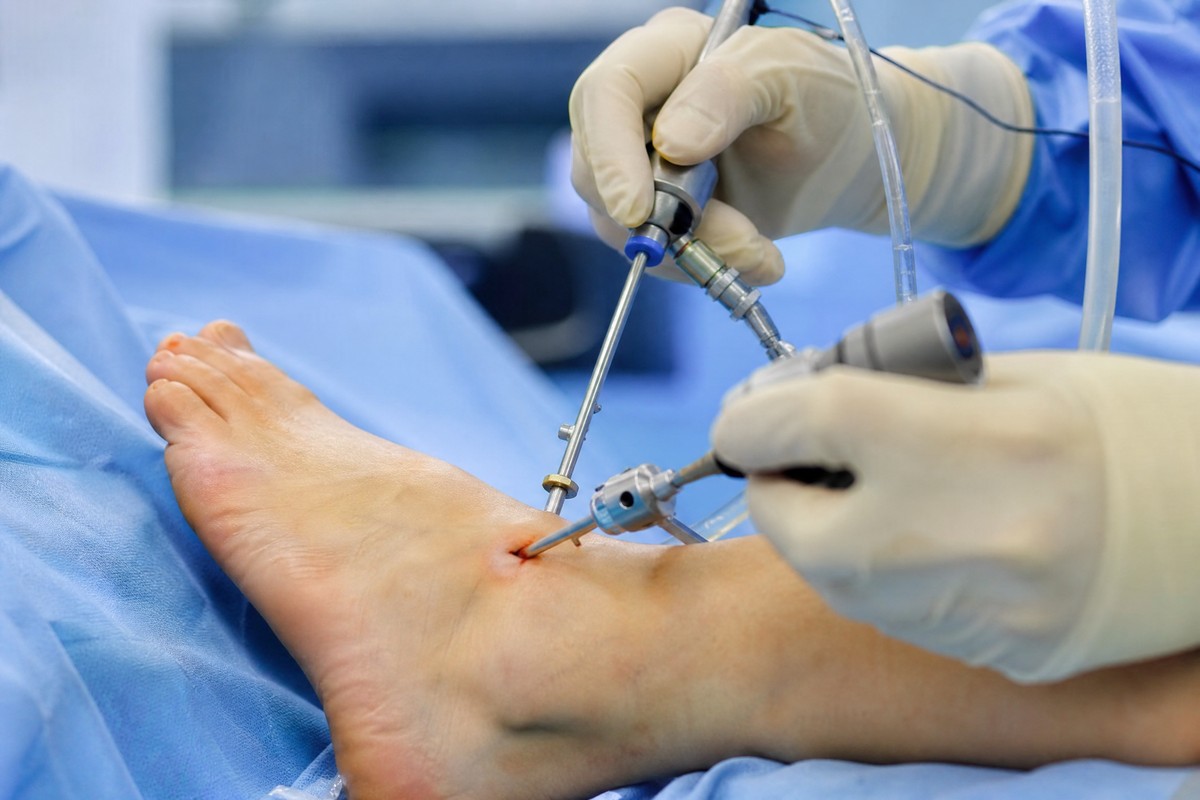
For decades, the prospect of bunion surgery has filled patients with dread. The traditional approach—often involving long incisions, significant postoperative pain, visible scarring, and months of restricted mobility—caused many people to delay treatment until their bunion pain became absolutely unbearable.
Fortunately, the field of podiatric surgery has evolved dramatically. At Diablo Foot & Ankle in Walnut Creek, we specialize in Minimally Invasive Surgery (MIS) for bunion correction. This modern approach offers a revolutionary alternative to traditional open surgery, allowing patients to correct their foot deformities with significantly less trauma, reduced pain, and a much faster return to their daily lives.
If you are suffering from bunion pain in the East Bay, here is what you need to know about the minimally invasive option.
The Problem with Traditional Bunion Surgery
To understand the benefits of MIS, it helps to understand how traditional bunion surgery is performed.
A bunion is not simply an overgrowth of bone; it is a complex structural deformity where the first metatarsal bone (the long bone behind the big toe) shifts outward, while the big toe itself drifts inward toward the smaller toes.
In traditional open surgery, the surgeon makes a long incision (often 3 to 5 inches) along the side or top of the foot to fully expose the joint. The surgeon then cuts the bone (an osteotomy), shifts it back into proper alignment, and secures it with screws or plates.
While effective at correcting the deformity, this extensive cutting of the skin, joint capsule, and surrounding soft tissues causes significant trauma. This trauma is the primary reason for the severe pain, swelling, stiffness, and long recovery times associated with traditional bunionectomies.
How Minimally Invasive Bunion Surgery Works
Minimally invasive bunion surgery achieves the same structural correction as traditional surgery, but it does so through a completely different approach that respects the soft tissues of the foot.
Instead of a long incision, our Walnut Creek podiatric surgeons make a few tiny "keyhole" incisions, usually no larger than a quarter of an inch. Through these tiny portals, we insert specialized, high-speed surgical burrs—similar to the precision instruments used by dentists.
Using advanced fluoroscopy (real-time X-ray imaging) to guide the instruments, the surgeon carefully cuts and realigns the bone without ever fully exposing the joint. Once the bone is in the correct position, it is secured with specialized hardware designed specifically for minimally invasive techniques.
The Benefits of the Minimally Invasive Approach
The difference in the patient experience between traditional and minimally invasive surgery is profound. By preserving the soft tissues and joint capsule, MIS offers several distinct advantages:
- Significantly Less Postoperative Pain: Because there is far less trauma to the skin, muscles, and nerves, patients experience substantially less pain after surgery. Many of our MIS patients require only over-the-counter pain relievers or a very short course of prescription medication.
- Faster Recovery and Weight-Bearing: Traditional surgery often requires patients to be completely non-weight-bearing on crutches or a scooter for several weeks. With minimally invasive surgery, the joint capsule remains intact, providing greater stability. Most of our MIS patients are able to walk on their operative foot (in a protective surgical shoe) immediately after surgery.
- Reduced Swelling and Stiffness: Less tissue damage means less inflammatory response. Patients experience less swelling and are less likely to develop the severe joint stiffness that often plagues traditional surgery patients. This makes postoperative physical therapy easier and more effective.
- Minimal Scarring: The tiny keyhole incisions require only one or two stitches and heal to leave scars that are virtually invisible. This is a significant cosmetic advantage for patients who want to wear sandals or go barefoot without obvious surgical marks.
- Lower Risk of Complications: Smaller incisions reduce the risk of postoperative infections and wound healing complications.
Is Minimally Invasive Surgery Right for You?
While minimally invasive bunion surgery is an excellent option for many patients, it is not suitable for every single bunion.
MIS is generally most effective for mild to moderate bunion deformities. If you have a very severe, long-standing bunion, significant arthritis in the big toe joint, or severe hypermobility in the foot, a traditional open approach or a joint fusion may still be the most appropriate and durable solution.
The only way to know for sure which surgical approach is right for you is to undergo a comprehensive evaluation.
Expert Surgical Care at Diablo Foot & Ankle
When it comes to minimally invasive foot surgery, experience matters. The techniques require specialized training, precision, and a deep understanding of foot biomechanics.
The surgical team at Diablo Foot & Ankle is highly trained in the latest MIS techniques. During your consultation at our Walnut Creek clinic, we will take detailed X-rays, assess the severity of your bunion, discuss your lifestyle and goals, and determine if you are a candidate for minimally invasive correction.
We are committed to providing our patients with the most advanced, effective, and comfortable care possible. We also serve patients at our Antioch and San Ramon locations.
Do not let the fear of a long, painful recovery keep you from living a pain-free life. Call us today at (925) 464-1982 to schedule your bunion consultation and learn more about the minimally invasive difference.
Disclaimer: The information provided in this article is for educational purposes only and does not constitute medical advice. It is not intended to be a substitute for professional medical advice, diagnosis, or treatment. Always seek the advice of your physician or other qualified health provider with any questions you may have regarding a medical condition. Never disregard professional medical advice or delay in seeking it because of something you have read in this article.
Related articles


Request your podiatry consultation now
Fill out our contact form for a prompt call back. Diablo Foot & Ankle: Premier podiatry group in Walnut Creek & Antioch
