
.svg)

.svg)
.svg)
Pain Under the Ball of the Foot: Metatarsalgia, Neuroma, or Something Else?



A sore spot under the front of the foot can make ordinary steps feel surprisingly difficult. The ball of the foot is the padded area just behind the toes, where the metatarsal bones meet the ground during push-off. Pain may follow a longer walk, a new workout, hard floors, or shoes that do not feel right. But the same location can be involved in several different conditions. A burning feeling in the forefoot is not enough to identify its cause on its own.
That is why it helps to think in patterns rather than labels. Metatarsalgia, Morton’s neuroma, and pressure overload from activity or footwear can all affect the ball of the foot. They can also overlap with toe-joint irritation, skin pressure, changes in foot shape, arthritis, or a bone injury. A careful assessment can sort through those possibilities and help avoid guessing from a symptom alone.
What “metatarsalgia” means
Metatarsalgia is a term for pain and irritation in the ball of the foot, not a single diagnosis with one cause. It often reflects extra or uneven load through the metatarsal heads, the rounded ends of the long bones behind the toes. The discomfort may be aching, sharp, or burning. Some people notice it mainly when standing, walking, running, or rising onto the front of the foot. Barefoot walking on a hard surface may make it more noticeable.
Load can change for many reasons. A rapid increase in running, jumping, court sports, or standing time may ask more of the forefoot than it is used to handling. Worn athletic shoes, shoes without enough room or support for the individual foot, narrow toe boxes, and high heels can shift or concentrate pressure. A high arch, a longer second toe, a bunion, a hammertoe, or a callus may also affect where the foot bears weight. None of these features proves metatarsalgia, but they are useful clues during an exam.
When a neuroma pattern may be part of the picture
Morton’s neuroma involves thickened tissue around a small nerve that travels toward the toes. Despite the name, it is not a cancerous tumor. It most often affects the space between the third and fourth toes, although it can occur elsewhere in the forefoot. Compression and repeated irritation in that space can contribute to symptoms.
A neuroma-type pattern may include burning or sharp pain that travels toward nearby toes, tingling, numbness, or a feeling like a pebble, marble, or bunched sock is under the forefoot. Symptoms may be more apparent in tight or narrow shoes, high heels, or activities with strong push-off. There may be no visible lump or skin change. These features can point a clinician toward a nerve-related problem, but they do not confirm one. Similar sensations can occur with other sources of forefoot pain.
Why activity and footwear still matter
Activity and footwear are not minor details. They can be the reason a previously quiet area becomes painful, and they may also aggravate an underlying structural or nerve issue. A useful history includes what changed before the symptoms began: a new walking route, more miles, a return to exercise, more time on hard surfaces, different work shoes, or an older pair of athletic shoes that no longer feels stable or cushioned.
For someone in Antioch, a long shift on hard flooring or a weekend of higher-impact activity may be relevant context, but it does not settle the diagnosis. Pain that occurs only in one pair of shoes may tell a different story than pain that appears in every shoe, at rest, or at night. The location matters too. Pain directly under one metatarsal head, pain in the web space between toes, and pain centered in a toe joint can feel close together while reflecting different tissues.
What a focused assessment looks for
Foot pain is best evaluated as a combination of symptoms, mechanics, and medical history. A clinician may ask when the pain started, whether it followed an injury or training change, exactly where it is felt, and whether there is tingling, numbness, swelling, or skin change. They may also ask about prior foot problems, inflammatory conditions, diabetes, circulation concerns, and the shoes worn most often.
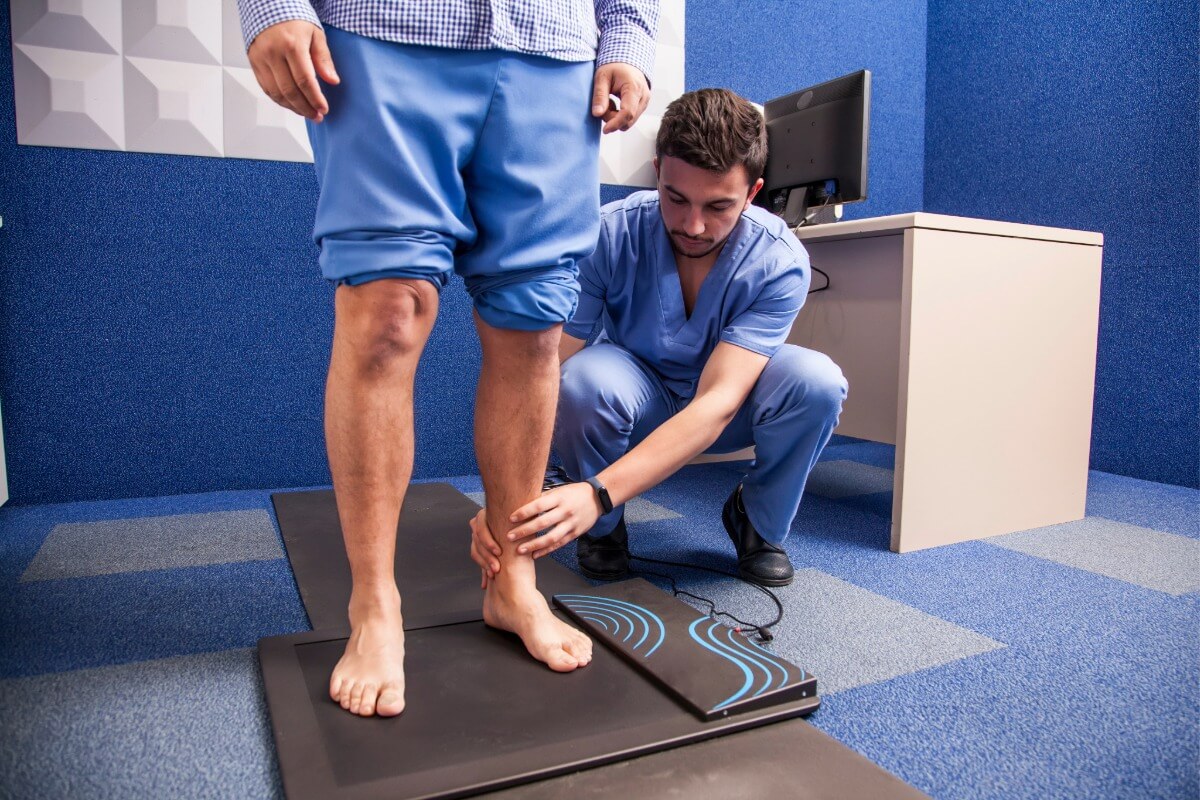
The examination may include looking at the skin, calluses, toe position, and arch shape; feeling for the most tender area; checking toe and joint motion; and assessing how the foot responds to gentle pressure. Observing standing or walking can add context. If the exam suggests another problem needs to be ruled out, imaging or other testing may be considered. For example, an X-ray can help assess certain bone or joint concerns, while other tests may be selected for a suspected soft-tissue or nerve issue. The right test depends on the question raised by the history and exam.
• Note the trigger: Is the pain linked to push-off, a long day standing, a workout, or a particular shoe?
• Describe the feeling: Aching pressure, sharp pain, burning, tingling, numbness, and a foreign-body sensation are all worth reporting.
• Locate it precisely: A fingertip-sized location and whether symptoms spread into specific toes can be more useful than simply saying “the ball of my foot.”
• Bring the shoes if practical: Wear patterns, toe-box shape, and the condition of the sole can offer helpful context.
When ball-of-foot pain needs prompt attention
Do not wait for a routine appointment if you have serious pain or swelling, especially after an injury; cannot walk or put weight on the foot; have an open wound or drainage; or notice warmth, tenderness, a skin-color change, and fever. Those symptoms need urgent medical evaluation. New or worsening pain with a visible deformity after an injury also deserves prompt care.
If you have diabetes, take any foot wound, blister, sore, new loss of feeling, or change in foot color or temperature seriously and contact a healthcare professional promptly. Diabetes can reduce sensation and affect circulation, so a problem may be easier to miss or may need earlier attention. For non-urgent symptoms, arrange an evaluation when burning, tingling, or ball-of-foot pain lasts more than a few days, recurs, or does not ease after avoiding the activity or shoe that clearly worsens it.
Care should follow the cause
An individualized plan begins after the likely source of pain is identified. Depending on the findings, care may focus on changing the pressure reaching a painful area, reviewing footwear fit and activity demands, supporting a mechanical issue, or addressing a nerve, joint, skin, or bone concern. A clinician can explain the purpose, benefits, limitations, and alternatives of any recommended option in the context of your health and goals. You can learn more about the practice’s foot and ankle treatments before your visit.
Diablo Foot & Ankle serves Walnut Creek, Antioch, and San Ramon. An assessment is especially useful when a recurring forefoot problem is changing how you walk, exercise, or choose shoes. The goal is not to assign a label from a symptom description; it is to understand what is driving the pressure or sensation in your foot.
This article is for general educational purposes only and is not medical advice, diagnosis, or a substitute for care from a qualified healthcare professional.
Related articles


Request your podiatry consultation now
Fill out our contact form for a prompt call back. Diablo Foot & Ankle: Premier podiatry group in Walnut Creek & Antioch
