
.svg)

.svg)
.svg)
Plantar Warts in Walnut Creek: Causes, Symptoms, and Effective Treatments


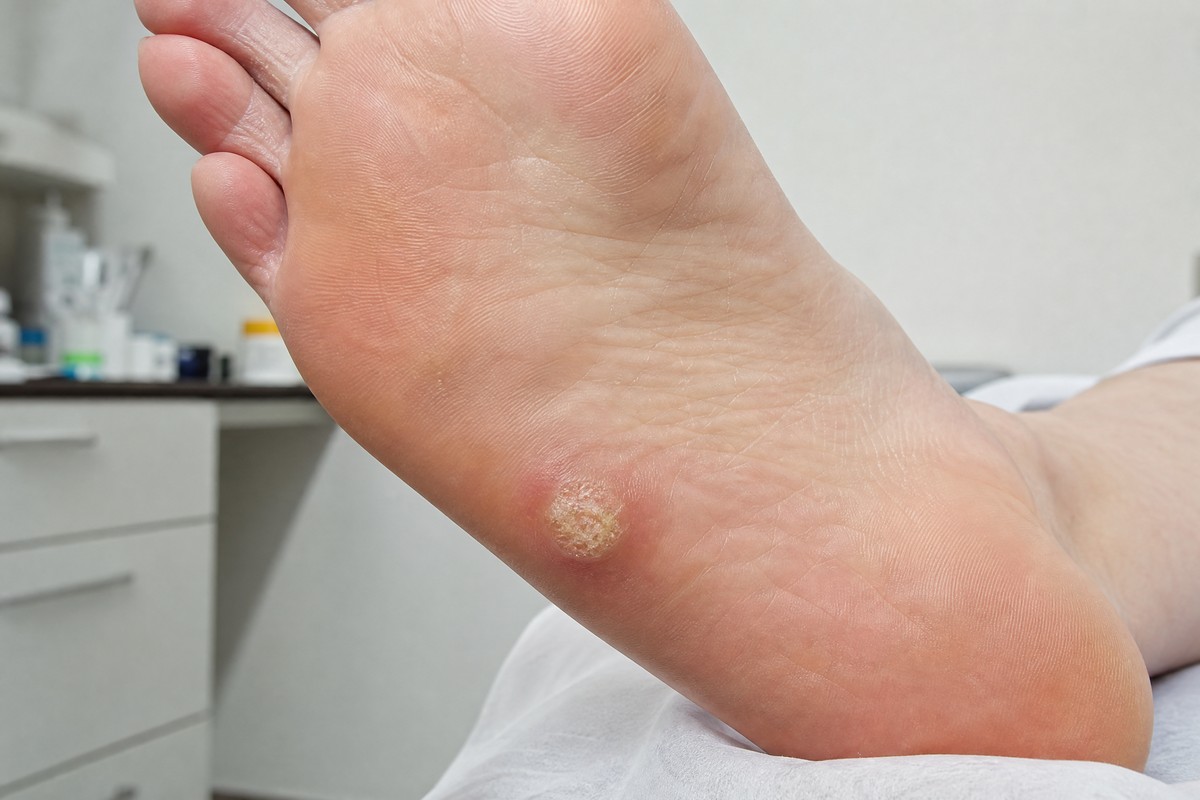
If you have noticed a small, rough, grainy growth on the bottom of your foot, you might be dealing with a plantar wart. While warts are generally harmless in terms of your overall health, they can be incredibly stubborn, highly contagious, and, depending on their location, surprisingly painful.
At Diablo Foot & Ankle in Walnut Creek, plantar warts are a common complaint. Many patients endure the discomfort for months, trying various over-the-counter treatments before finally seeking professional help. If you are dealing with a suspected plantar wart, this guide will explain what causes them, why they are so difficult to get rid of, and how our podiatrists can help you eliminate them for good.
What Is a Plantar Wart?
A plantar wart (verruca plantaris) is a non-cancerous skin growth caused by a viral infection in the top layer of the skin. The culprit is the human papillomavirus (HPV). There are more than 100 different strains of HPV, but only a few specific strains cause warts on the feet.
Unlike warts that appear on the hands or other parts of the body, which tend to grow outward, plantar warts grow inward. The constant pressure of walking and standing pushes the wart deep into the skin, often causing a thick layer of callus to form over it. This inward growth is what makes plantar warts so painful; it can feel like you are constantly walking on a small pebble.
Identifying a Plantar Wart
Plantar warts can sometimes be mistaken for corns or calluses, but there are a few distinguishing features:
- Location: They typically appear on the weight-bearing areas of the foot, such as the heel or the ball of the foot.
- Appearance: They often have a rough, grainy, or fleshy surface.
- Black Dots: You may notice tiny black dots near the center of the wart. These are often mistakenly called "wart seeds," but they are actually small, clotted blood vessels that supply the wart with nutrients.
- Pain: Plantar warts are usually painful when squeezed from the sides, whereas calluses tend to be painful when pressed directly.
- Interrupted Skin Lines: The normal striations (lines) of your skin will go around the wart, rather than across it.
How Do You Get Plantar Warts?
The HPV strains that cause plantar warts thrive in warm, moist environments. The virus enters the body through tiny cuts, scrapes, or weak spots on the bottom of the foot.
You are most likely to contract the virus through direct contact with a contaminated surface. Common high-risk areas in Walnut Creek include:
- Public swimming pool decks
- Communal showers and locker rooms at gyms
- Yoga or martial arts studios where people practice barefoot
- Sharing shoes or socks with someone who has a wart
It is important to note that not everyone who comes into contact with the virus will develop a wart. Your immune system's response plays a significant role. Children, teenagers, and individuals with weakened immune systems are more susceptible to the virus.
Why Home Remedies Often Fail
The internet is full of home remedies for warts, ranging from duct tape occlusion to applying garlic or banana peels. Pharmacies also offer a wide array of over-the-counter (OTC) salicylic acid treatments and freezing kits.
While these methods can occasionally be successful for small, superficial warts, they frequently fail for plantar warts. Here is why:
The Callus Barrier: The thick layer of callus that forms over a plantar wart acts as a shield. OTC topical treatments often cannot penetrate this thick skin to reach the viral tissue beneath.
Inadequate Freezing: OTC freezing kits do not reach the extremely low temperatures necessary to effectively destroy the wart tissue, especially when it is buried deep in the foot.
Incomplete Eradication: If even a microscopic amount of the virus remains, the wart will grow back. Home treatments often fail to destroy the entire lesion.
Furthermore, aggressive attempts to remove a wart at home with nail clippers or pumice stones can damage the surrounding healthy tissue, cause bleeding, and actually spread the virus to other parts of the foot.
Professional Treatment at Diablo Foot & Ankle
When you visit our Walnut Creek clinic for a plantar wart, our goal is to eliminate the virus completely while minimizing pain and damage to the surrounding skin. We offer several highly effective, evidence-based treatments.
Prescription-Strength Salicylic Acid: We use a much higher concentration of salicylic acid than what is available over the counter. This medication works by peeling away the infected skin layers a little bit at a time. It also stimulates your immune system to fight the virus. This treatment is often combined with regular debridement (trimming) of the wart in our office.
Cryotherapy (Freezing): Professional cryotherapy involves applying liquid nitrogen directly to the wart. This is significantly colder and more effective than OTC freezing kits. The extreme cold causes a blister to form around the wart, and the dead tissue sloughs off within a week or two. Multiple treatments may be necessary.
Cantharidin: This is a chemical compound derived from the blister beetle. When applied to the wart, it causes the skin under the wart to blister, lifting the wart off the foot. You will return to the office a few days later so the podiatrist can remove the dead wart tissue.
Laser Treatment: For stubborn warts that have not responded to other therapies, laser treatment can be highly effective. The laser targets and destroys the tiny blood vessels that feed the wart, essentially starving it to death.
Immune Therapy: In some cases, we may use topical or injectable medications designed to stimulate your body's own immune system to recognize and attack the HPV virus.
Preventing Plantar Warts
While you cannot completely eliminate the risk of exposure, you can take steps to protect your feet:
- Never go barefoot in public areas. Always wear sandals or water shoes in locker rooms, public showers, and around pools.
- Keep your feet clean and dry. Change your socks daily, especially if your feet sweat heavily.
- Do not touch other people's warts.
- Do not pick or scratch at your own warts. This can spread the virus to other parts of your body.
- Wash your hands carefully after touching your wart.
- Use a separate pumice stone or emery board for your wart, and do not use it on healthy skin.
Schedule Your Appointment in Walnut Creek
If you are dealing with a painful or persistent plantar wart, do not waste time and money on ineffective home remedies. The podiatrists at Diablo Foot & Ankle have the expertise and advanced treatments necessary to resolve the issue quickly and safely.
We proudly serve patients at our main clinic in Walnut Creek, as well as our locations in Antioch and San Ramon.
Call us today at (925) 464-1982 to schedule your appointment, or book online through our website. Let us help you walk comfortably again.
Disclaimer: The information provided in this article is for educational purposes only and does not constitute medical advice. It is not intended to be a substitute for professional medical advice, diagnosis, or treatment. Always seek the advice of your physician or other qualified health provider with any questions you may have regarding a medical condition. Never disregard professional medical advice or delay in seeking it because of something you have read in this article.
Related articles



Request your podiatry consultation now
Fill out our contact form for a prompt call back. Diablo Foot & Ankle: Premier podiatry group in Walnut Creek & Antioch
