
.svg)

.svg)
.svg)
Youth Sports Foot and Ankle Injuries: When Parents Should Schedule a Podiatry Visit



Sports pain is worth noticing early
Soccer, basketball, dance, track, and other youth activities ask a lot of growing feet and ankles. A quick twist can cause a visible problem right away. Other concerns build more quietly: a child starts rubbing the back of the heel after practice, changes how they land from a jump, or comes home with a limp that is gone by morning and back after the next game.
Parents do not need to identify the exact cause at home. Take a pain complaint seriously when it changes walking, running, or participation. Repetitive activity can affect growing muscles, tendons, ligaments, bones, and growth areas. A child-focused evaluation can clarify what needs attention.
Heel pain after running or jumping
Heel pain is common in active children and teens, particularly during growth spurts. Running and jumping can irritate the growth area at the back of the heel, a condition often called calcaneal apophysitis or Sever’s disease. Tightness through the calf and Achilles tendon can add pull to that area. A child may point to the heel or walk differently after activity.
Heel pain is not a diagnosis by itself. Pain location, age, sport, training changes, footwear, and the examination all matter. Schedule a podiatry visit when heel pain keeps returning, lasts more than a few days, interferes with normal walking, or makes a child sit out activity. Do not ask a young athlete to “run through” heel pain to see if it improves.
A twisted ankle may need a closer look
An ankle sprain happens when ligaments that stabilize the joint are stretched or torn, often after the foot rolls inward. Pain with walking, swelling, bruising, tenderness, or a sense that the ankle is giving way can follow. The amount of swelling alone does not reliably tell a parent how serious an injury is. A significant sprain can look and feel much like a fracture.
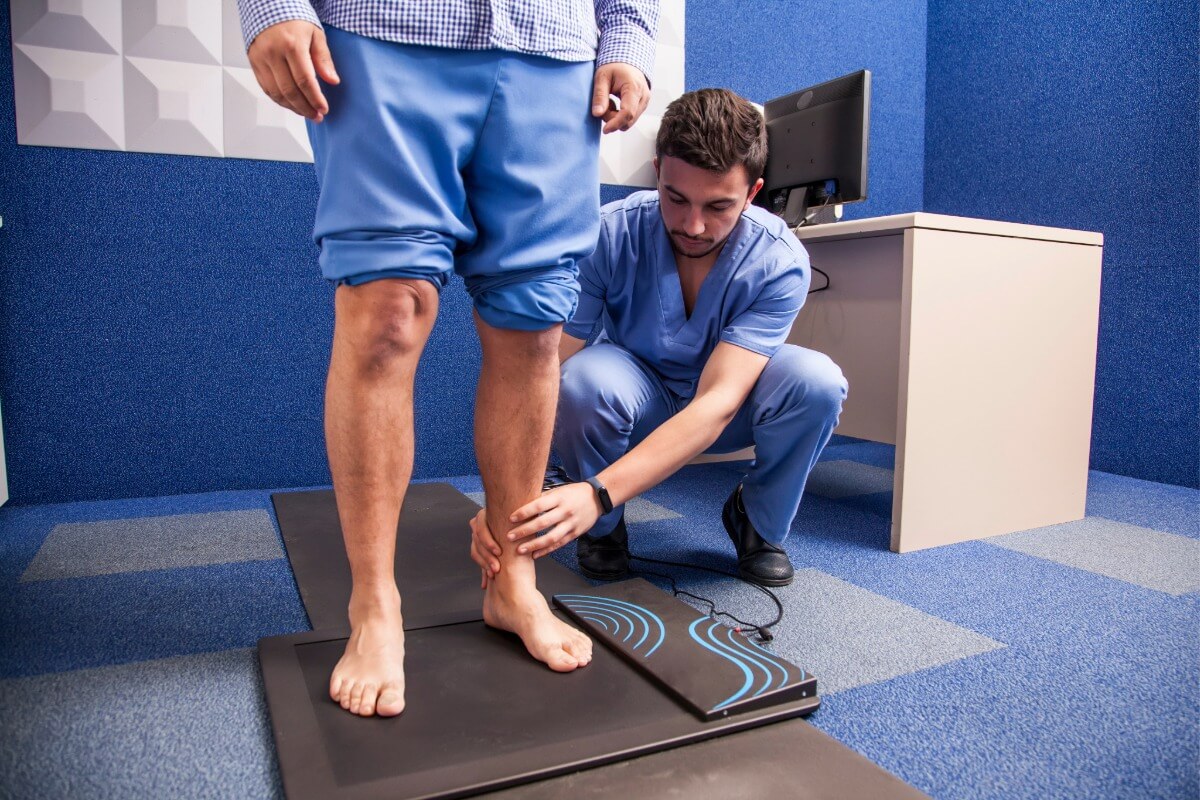
A podiatric evaluation considers how the injury happened and includes a careful examination of the foot and ankle. Imaging may be used when appropriate to look for a bone injury or clarify another source of symptoms. This is especially important when pain is over a bone, weight bearing is difficult, or symptoms do not follow a reassuring course. An examination is not a shortcut to sports participation; it helps guide individualized next steps.
Tendon discomfort can be a sign to slow down
Tendons connect muscle to bone. In young athletes, repeated loading from sprinting, hills, jumping, or a sudden increase in practice can cause discomfort around the ankle or heel. The Achilles tendon connects the calf muscles to the heel. A child may describe stiffness, soreness during activity, or pain when pushing off.
Because tendon discomfort can overlap with pain from nearby growth areas, joints, or bones, it is best not to label it from a sideline observation. Note when symptoms began, whether a training schedule or footwear changed, and which movements cause pain. Bring those details to the visit.
Persistent limping is an important clue
A limp is not something to ignore simply because a child can still finish a game. It can be a protective change in walking caused by pain, weakness, or limited motion. Seek medical attention if it remains the next day after a twist or fall, recurs with practice, appears without a clear injury, or changes everyday walking.
A limp does not tell parents what the problem is. Avoid repeated drills, running, or jumps to test the painful foot or ankle before it is evaluated.
When to schedule a podiatry visit
For families in San Ramon, consider scheduling a podiatry appointment when a young athlete has pain that persists, returns, or changes how they move. It is also reasonable to arrange an evaluation when symptoms are not improving after a short period away from the aggravating activity.
• Heel, ankle, or foot pain lasts more than a few days or comes back whenever practice resumes.
• A child limps, avoids pushing off, changes their running form, or cannot comfortably take part in usual daily activities.
• There is ongoing swelling, bruising, tenderness, or a feeling that the ankle is unstable after a twist.
• Pain began after a noticeable increase in training, a new sport season, repeated jumping, or a change in shoes or playing surface.
• You are unsure whether the pain is coming from the heel, a tendon, a joint, or a bone.
Know when not to wait for a routine appointment
Some symptoms call for urgent or emergency assessment instead of waiting for a podiatry visit. Seek emergency care for an obvious deformity, bone visible through the skin, heavy bleeding, numbness, tingling, weakness, a cold foot, or an inability to put weight on the leg or foot or walk without pain after an injury. Rapidly increasing swelling after a fall or collision also needs prompt evaluation. If symptoms seem severe or you are concerned about your child’s safety, choose urgent medical care.
For a non-emergency injury with swelling, bruising, or a limp but no obvious deformity, a pediatric urgent care setting may be appropriate when timely assessment is needed. Follow the guidance of the evaluating clinician on activity and follow-up. Do not use an online article, a coach’s opinion, or the absence of pain for a few hours as a return-to-sport decision.
What a child-specific visit can add
A podiatry visit is an opportunity to look beyond a single painful play. The clinician can ask about sport schedule, prior injuries, growth changes, surface, footwear, and the way symptoms affect school and daily life. They can examine both sides for motion, tenderness, stability, gait, and other findings that may guide next steps. If imaging or another referral is appropriate, that decision is based on the child’s history and examination rather than a one-size-fits-all rule.
Parents can help by bringing the shoes used for the sport when practical and sharing a simple timeline: when pain began, what activity was happening, whether there was a pop or fall, and what makes symptoms better or worse. These details can make the conversation more useful. Learn more about available treatments as part of a discussion with a qualified clinician.
Support the young athlete, not the pressure to play
It can be hard to pause a season, miss a tournament, or disappoint a team. Still, a child’s report of pain is meaningful information. Calmly listening, removing pressure to play through symptoms, and arranging appropriate evaluation can help families make decisions based on the child rather than the schedule. Diablo Foot & Ankle serves Walnut Creek, Antioch, and San Ramon with care centered on each patient’s individual needs.
This article is for general educational purposes only and is not medical advice, a diagnosis, or a substitute for care from a qualified health professional. It does not provide return-to-play clearance. For urgent or emergency symptoms, seek appropriate immediate medical care.
If your child’s sports-related foot or ankle symptoms are persistent or concerning, schedule an appointment with Diablo Foot & Ankle.
Related articles


Request your podiatry consultation now
Fill out our contact form for a prompt call back. Diablo Foot & Ankle: Premier podiatry group in Walnut Creek & Antioch
